
Frank Juárez
This past year I have been mentoring a couple of emerging artists. Topics ranging from social media presence to website design, the importance of networking to reassessing studio practices, critiques to entering juried exhibitions, and gallery representation to effective business of art practices. As I continue to get more involved in this mentorship, I find myself thinking about a question that I would often ask when I was a child, “Why?” Such a simple question, but difficult to answer. Asking ourselves ‘why’ allows us to get to the core of what we do as artists. It also provides a direction to explore
Our art careers ebb and flow like Wisconsin weather. When we put ourselves out there, we experience all sorts of outcomes, thoughts, and emotions. Like life, there are things we can and cannot control. Sometimes every step we take forward may feel like we stepped three steps backwards. After all isn’t the journey the beauty of being an artist?
Our journey is an ongoing cycle of acceptances, rejections, accomplishments, and setbacks. Oftentimes driven by exhibitions, artist-in-residency program, grants, media, or even gallery representation; to name a few. Our creative lives constantly shared on social media seeking that next opportunity.
When I began to take my studio practice seriously, I knew that I needed to get my art out there. One way was to submit to juried exhibitions. What I have learned is that the submission process varies so it important to carefully select your best work that communicates your skill, professionalism, and artistic voice. Try to avoid those last-minute decisions. Juried exhibitions have jurors. Jurors review submissions based on their criteria and what they are looking for in the context of the exhibition. Ultimately, artists receiving an acceptance or rejection via email by the institution. By the way, email notifications is the new norm so check your emails often.
Having your art rejected is not a good feeling. It stings! Self-doubt tends to surface. You begin to question your creative practice. The work you submitted may have been your best work. However, the rejection may be a result of multiple factors – not professionally photographed, out of focus, skewed lines, unable to identify the artist’s artistic voice, craftsmanship, etc. When juried exhibitions involve multiple jurors the process is a collaboration, negotiation, and consensus. Jurors come with varied experiences from different parts of the art world, which adds to the integrity and elevation of the exhibition and artists.
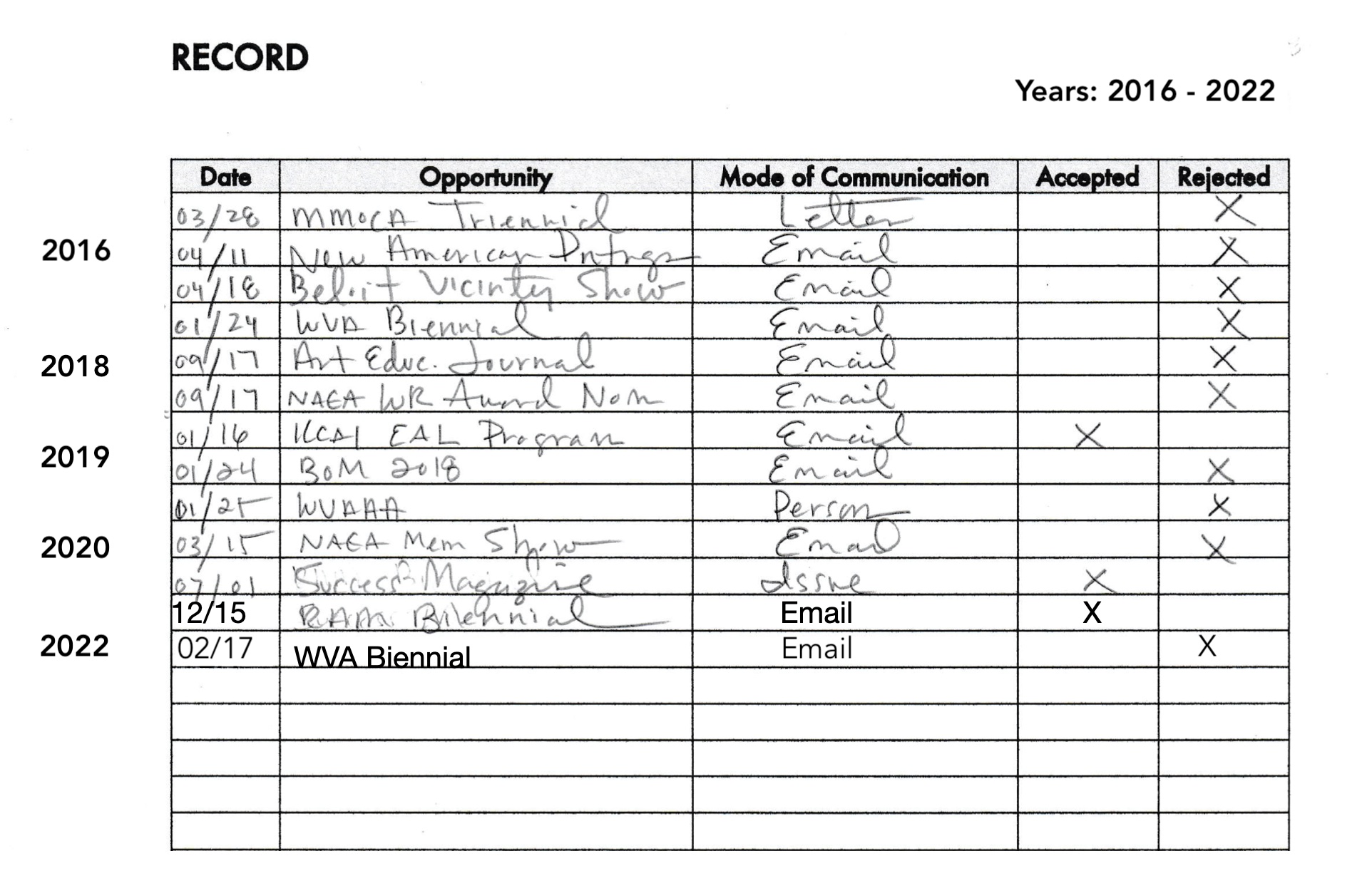
Everyone gets rejected. I have been rejected many times. I used to keep track how often I got rejected and accepted. My rejections easily outweighed my acceptances. For every three rejections I would get one acceptance. What I have learned is that it was those acceptances that made the journey worthwhile. Am I glutton for rejection, maybe. I cannot think of a better way to grow as an artist than to go through that unpleasant experience to process, evaluate my decisions, and come up with my takeaways. This is why I decided to stop dealing with rejections and began to work with them instead.
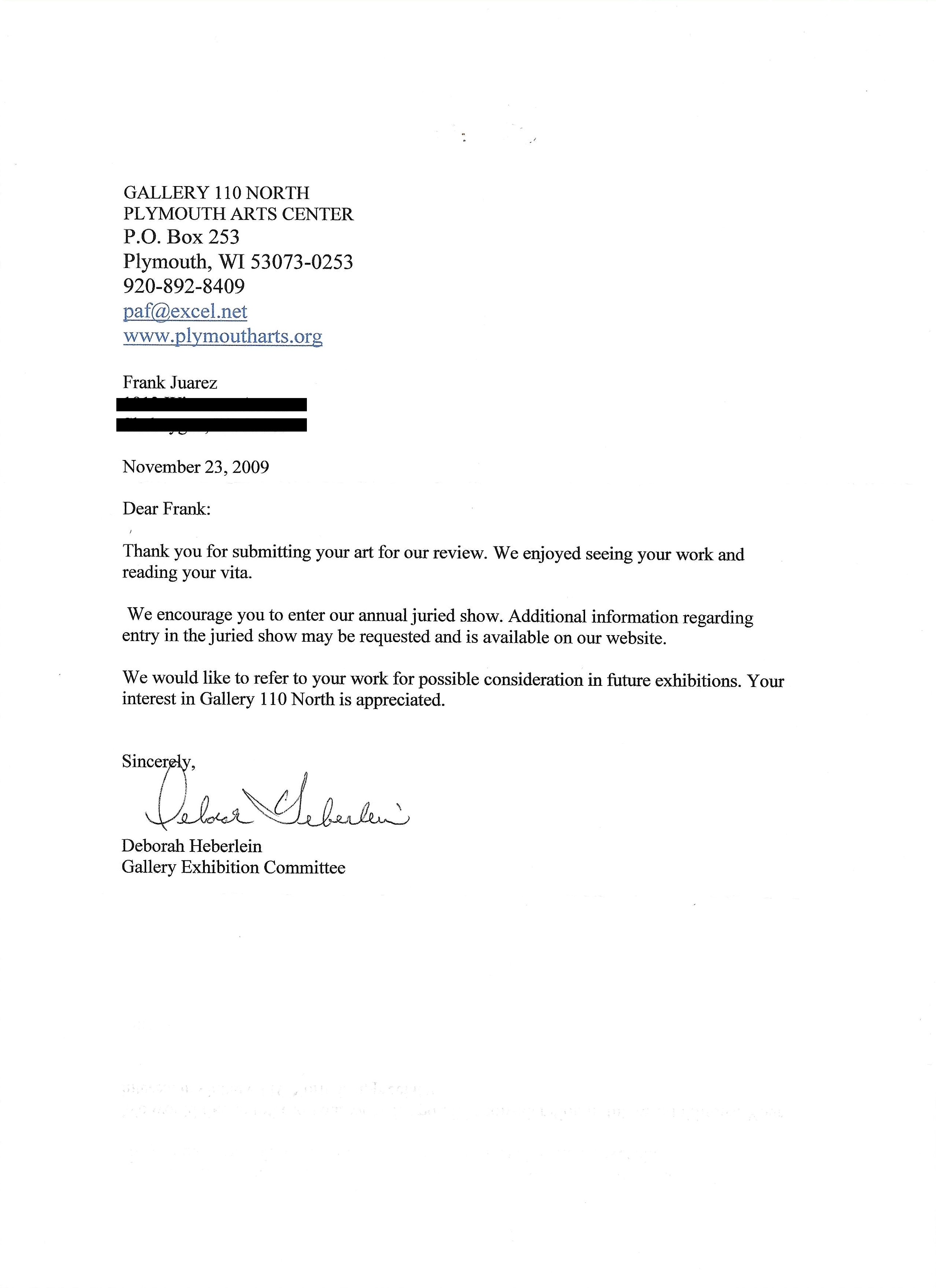
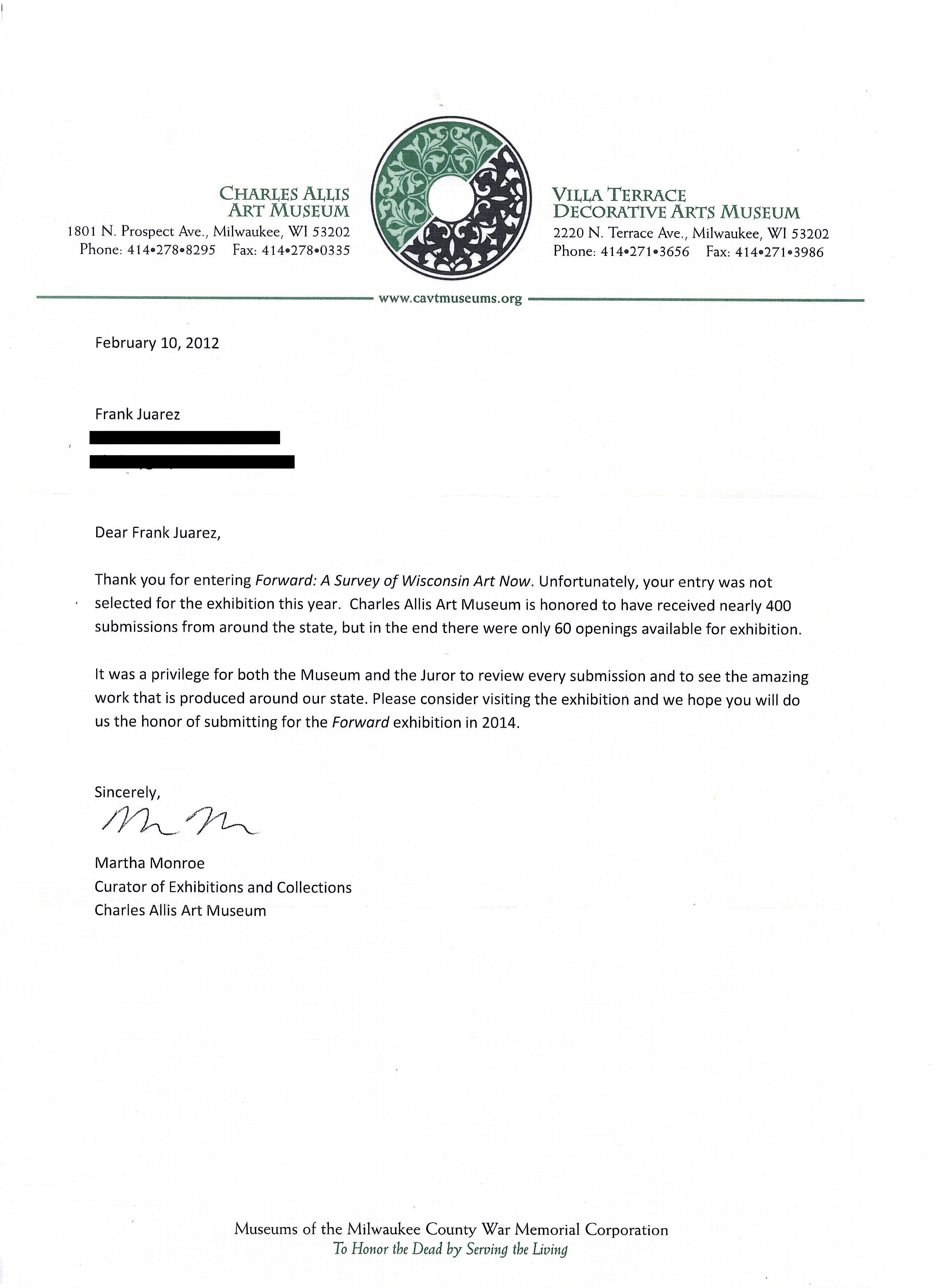
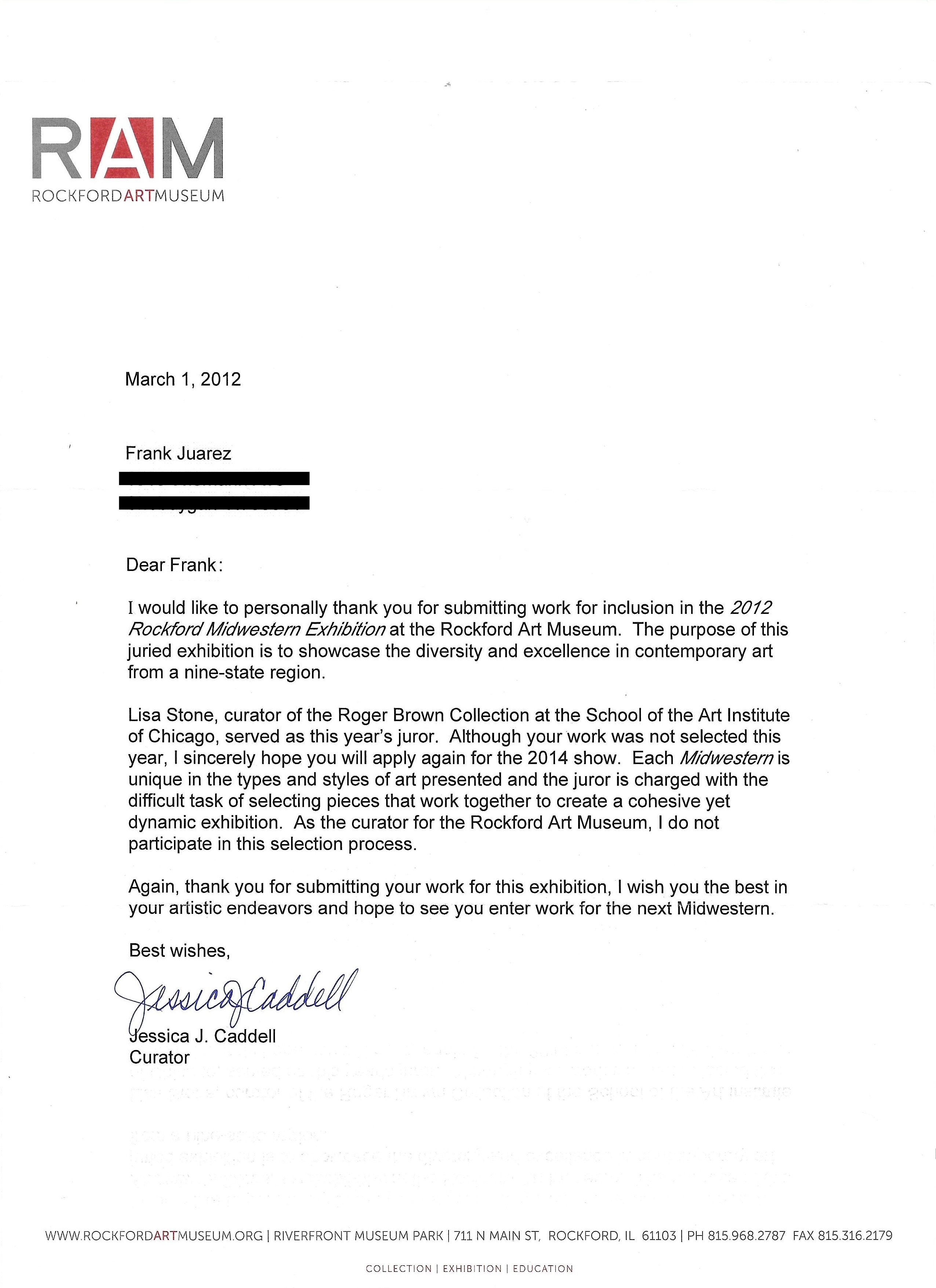
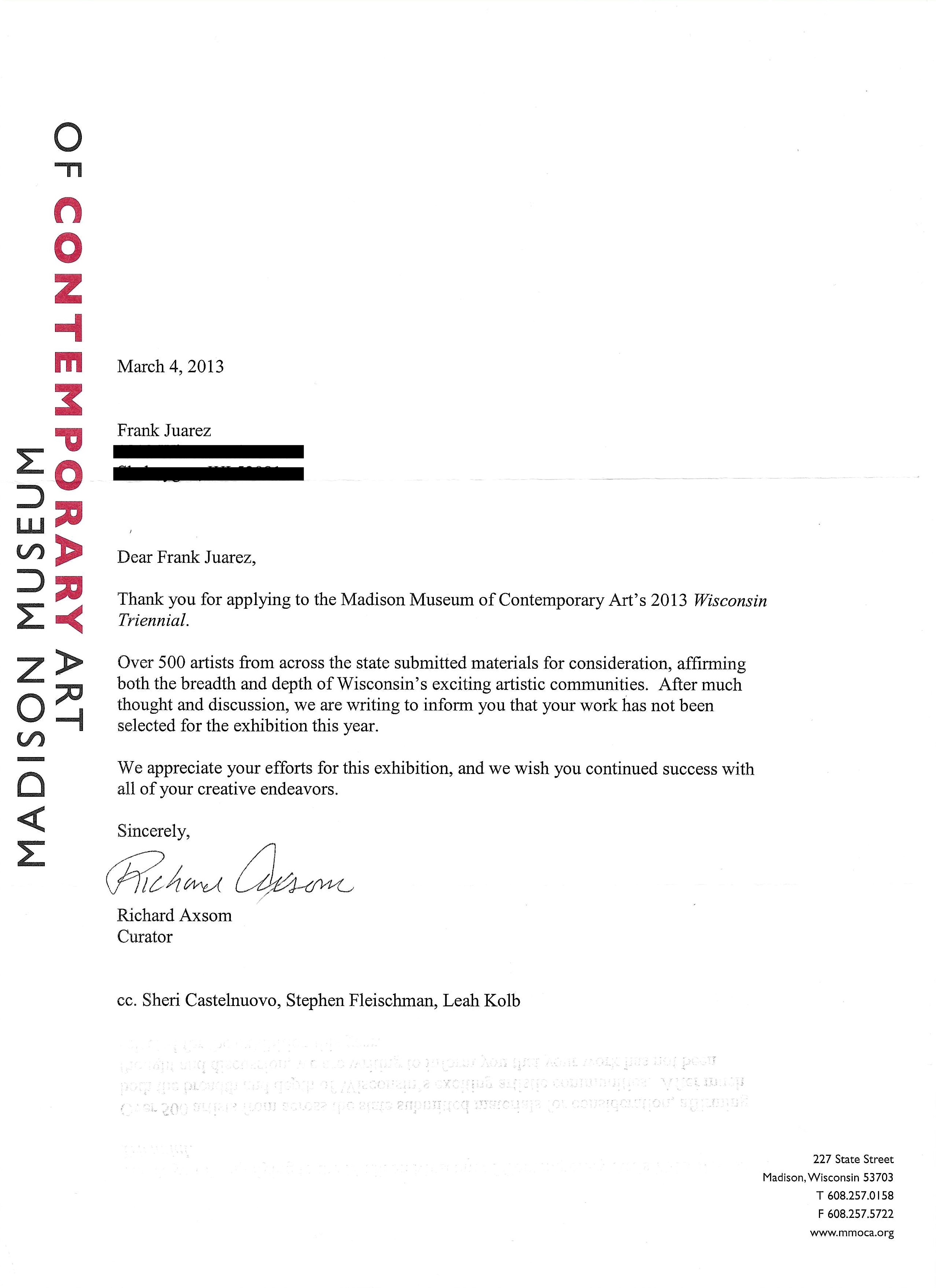
Here are some tips that have helped me in my 20+ career in art. Hopefully, they can help you navigate the world of art.
Rejections are not failures.
Acting on that next opportunity takes time, thought, and planning.
Every opportunity is not always a great opportunity. It important to spot the difference.
People will respond to your work differently.
Putting yourself out there takes courage.
Avoid last minute decisions.
Avoid submitting work at the last minute of the submission window.
Keep a running list of where you submitted your work – title of work, image, name of institution, juror(s), outcomes, and reflections. A paper trail is an effective way for assessment.
Every rejection is a learning moment. Embrace it!
If there is a juried exhibition you are highly interested in, keep submitting. Every year presents new jurors. You never know.
How do you work with rejections?
I would love to hear from you.
Let’s connect.


Frank Juárez brings over two decades of art education and arts management experience organizing local and regional art exhibitions, and community art events. He presents on art education at the state and national level, supports artists through grant programs, and offers professional development workshops for artists. Juárez is at the forefront of promoting Wisconsin artists, as well as attracting regional, national, and international artists to collaborate and exhibit in Wisconsin. Juárez’s projects include Artdose Magazine, 365 Artists 365 Days Project, Midwest Artist Studios Project, and the Indiana Green Invitational.
Juárez is the art department chair at Sheboygan North High School, editor-in-chief of SchoolArts magazine, and publisher of Artdose magazine.
 FRANK JUÁREZ